Break-Even After
Risk · Stop Loss
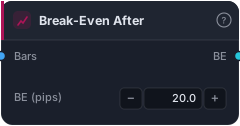
Profit threshold (pips) at which SL moves to entry price. Locks in no-loss once the trade has run far enough. Wire output into the Output node's BE socket.
Break-Even After locks in a no-loss trade once it's run far enough in your favour. You set a profit threshold in pips; when the trade reaches it, the stop moves up to the entry price, so the worst that can now happen is a scratch. It's one of the most popular trade-management tools because it removes the sting of watching a decent winner turn into a loss — once break-even is set, you're "playing with the market's money."
How it works
The block emits a per-bar BE (pips) threshold (default 20); the Bars input aligns it to your timeframe. You wire its output into the Tester's BE socket. When a trade's profit reaches that many pips, the engine moves the stop to entry. (The Tester also exposes a BE offset so you can lock in a few pips of profit rather than exact entry — set that on the Tester panel.) It's a one-way move: the stop ratchets to break-even and stays.
When to use it
Use Break-Even After to protect winners in any directional strategy, especially trend trades that can give back open profit. The key decision is the threshold: set it too tight and normal pullbacks bump you to break-even and then reverse back into the trade without you; set it too loose and you protect very little. A sensible default is to trigger break-even around 1R (your stop distance) so you're only de-risking once the trade has genuinely proven itself. It complements — doesn't replace — a Trailing Stop: break-even removes downside, trailing captures upside.
Example
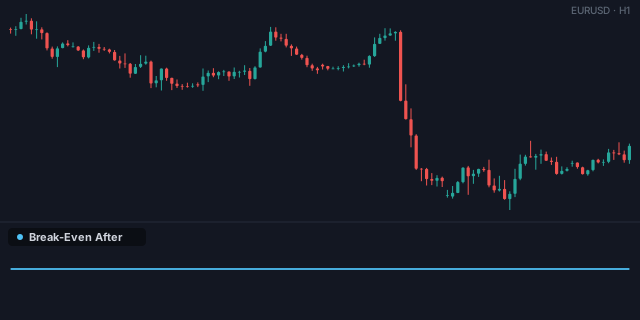
De-risk at 1R: with a 20-pip Fixed Stop-Loss, wire Bars into Break-Even After at 20 pips and route it to the Tester's BE socket — so once the trade is 20 pips (1R) in profit, the stop jumps to entry and the trade can't lose. Add a Trailing Stop to ride the rest. Backtest in the Tester.
Tips & gotchas
- Don't set it too tight. A threshold inside normal noise bumps you to break-even, then the trade reverses back up without you.
- ~1R is a sound default — de-risk only after the trade has earned it.
- Use the BE offset (on the Tester panel) to lock a few pips of profit instead of exact entry.
- Pairs with a Trailing Stop — break-even kills downside, trailing captures upside.
Related blocks
Inputs
| Socket | Type | What to wire in |
|---|---|---|
| Bars | bars |
Bars to align the output series to. |
Outputs
| Output | Type | Plots as | Description |
|---|---|---|---|
| BE | series |
Line · sub-pane | Per-bar break-even trigger in pips. |
Parameters
| Parameter | Type | Default | What it does |
|---|---|---|---|
| BE (pips) | number · 0.1–500.0 | 20.0 |
Reference auto-generated from the block catalog · category Risk.