VWAP
Indicators · Volume
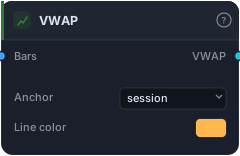
Volume-Weighted Average Price, anchored to session / week / all.
VWAP — Volume-Weighted Average Price — is the average price every trader actually paid, weighted by how much volume traded at each level. That makes it the market's consensus "fair value" for the period, and it's the single most-watched line on institutional desks: funds benchmark their fills against it, so price genuinely gravitates to and reacts around it. Above VWAP, buyers are in control for the session; below it, sellers are.
How it works
For each bar the block takes the typical price ((high + low + close) / 3), multiplies by that bar's volume, and keeps a running cumulative sum of both price × volume and volume. VWAP is the ratio of the two — so heavily-traded prices pull the line toward them far more than quiet bars do. Crucially, the running sums reset at the Anchor: session restarts each trading day, week each week, and all never resets (a single cumulative line across the whole history).
The anchor choice changes the tool entirely. Session VWAP is the intraday fair-value line day traders fade and ride; the weekly and all-time anchors give slower, structural reference levels. The single output plots as a line on the price pane in your chosen Line color.
When to use it
Use VWAP as a dynamic fair-value level. Intraday (session anchor): treat it as the line that separates bullish and bearish control, fade stretches back toward it in a range, or use a reclaim/rejection of it as a directional trigger. On higher anchors, it's a mean-reversion magnet and a place institutions defend. Because it needs real volume, it's most meaningful where volume is honest — stocks, futures, and crypto more than spot forex.
Example
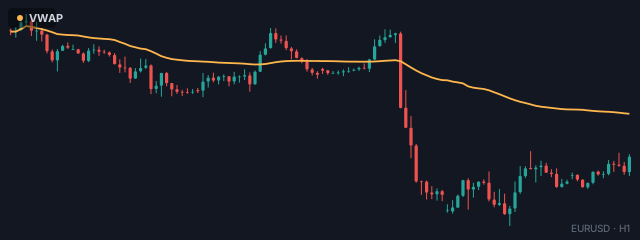
A VWAP-reclaim long for intraday: with Anchor on session, wire bars into VWAP and use a Crosses Above on price-vs-VWAP to fire when price reclaims fair value, routed into a Tester. Add a Session Filter so you only trade the active session that the anchor is built for, place a Tester below VWAP, and backtest in the Tester.
Tips & gotchas
- Match the anchor to the strategy.
sessionfor day trading,week/allfor swing context. A session VWAP means nothing on a weekly chart, and vice-versa. - Volume quality matters. On instruments with thin or synthetic volume the line is less trustworthy — prefer the Anchored VWAP from a meaningful event, or a price MA, there.
- It's a level, not a trigger. VWAP defines where — pair it with a trigger (a cross, a candle pattern) for when.
- Early-session VWAP is jumpy. With little cumulative volume just after a reset, the line whips around; it stabilises as the session fills in.
- Reclaims beat touches. A decisive close back through VWAP is a stronger signal than price merely tagging it.
Related blocks
Inputs
| Socket | Type | What to wire in |
|---|---|---|
| Bars | bars |
Price bars |
Outputs
| Output | Type | Plots as | Description |
|---|---|---|---|
| VWAP | series |
Line | VWAP line (price scale) |
Parameters
| Parameter | Type | Default | What it does |
|---|---|---|---|
| Anchor | choice (session, week, all) |
session |
Where the cumulative sum resets |
| Line color | colour | #ffb74d |
Reference auto-generated from the block catalog · category Indicators.