Historical Volatility
Indicators · Volatility
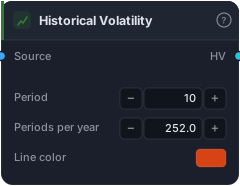
Annualized σ of log returns — realized volatility in %.
Historical Volatility (HV) is realized volatility expressed the way the options world quotes it: an annualized percentage. It answers "how volatile has this instrument actually been lately, on a standard yearly scale?" — so a reading of 15% on a stock means roughly the same thing as 15% on any other, regardless of price. That comparability is what makes HV more useful than raw Standard Deviation when you want to reason about volatility across markets or against an options implied-vol number.
How it works
The block takes log returns of the Source, computes their standard deviation over the Period (default 10), then annualizes by multiplying by the square root of the Periods per year — and scales to a percentage. That annualization factor is the one setting you must match to your data: 252 for stock trading days, 365 for daily FX/crypto, or 365 × 24 = 8760 for hourly bars. Get it wrong and the level is meaningless (though the shape still is). The output is a single % line in a sub-pane.
When to use it
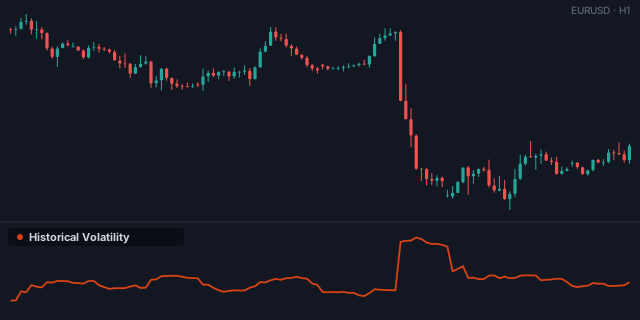
Use HV to size, gate, and compare. It's the natural input to volatility-based position sizing (smaller size when HV is high). It's a regime gauge — HV expanding from a low base often marks the start of a tradable move; HV at extreme highs warns of exhaustion and wide stops. And because it's annualized, you can compare it directly to options implied volatility to judge whether options are cheap or rich. Like all realized-vol measures, it's backward-looking — it tells you what has happened.
Example
Volatility-aware sizing: wire bars into Historical Volatility and feed the value into your risk logic so position size shrinks as HV climbs, keeping dollar risk steady. Combine with an entry trigger and route to a Tester, then check the equity smoothness in the Tester versus fixed sizing.
Tips & gotchas
- Set the annualization to your timeframe. 252 = stock days, 365 = daily FX, 8760 = hourly. Wrong factor → wrong level.
- Annualized % = comparable. Unlike StdDev (price units), HV compares across instruments and to options IV.
- Backward-looking. It's realized volatility — history, not a forecast.
- Expanding from lows = opportunity; extreme highs = caution and wider stops.
Related blocks
Inputs
| Socket | Type | What to wire in |
|---|---|---|
| Source | bars / series |
Price bars or any indicator series |
Outputs
| Output | Type | Plots as | Description |
|---|---|---|---|
| HV | series |
Line · sub-pane | Annualized HV (%) |
Parameters
| Parameter | Type | Default | What it does |
|---|---|---|---|
| Period | number · 2–500 | 10 |
|
| Periods per year | number · 1.0–100000.0 | 252.0 |
252 = stocks; 365·24 = FX hourly; 365 = daily FX |
| Line color | colour | #d84315 |
Reference auto-generated from the block catalog · category Indicators.